
Our Mission
Babaloo Rewoven has received over 10,000 donations of worn-out clothes, baby clothes, curtains, fabric scraps, yarn, and more as of January 2025 with the purpose to recycle and upcycle products. Our goal is to create, sell, and popularize sustainable fashion during an age of overconsumption.
Fast fashion is the marketing, designing, and production of clothing done quickly using low-cost resources to create readily available items to consumers. Popularized in the 1990s by ZARA with an objective to make new releases every 15 days, fast fashion companies have skyrocketed. The fast fashion industry is worth $3 trillion today and is expected to become one of the biggest industries in the world.
Fast fashion brands take advantage of poor work environments and low paying wages by outsourcing their production to developing countries. Workers are exposed to chemical hazards, gender wage gaps, limited hygiene and resources, dangerous building structures, and wages as low as $38 a month, paired with pollution from cheap materials, production, and transportation of these items.
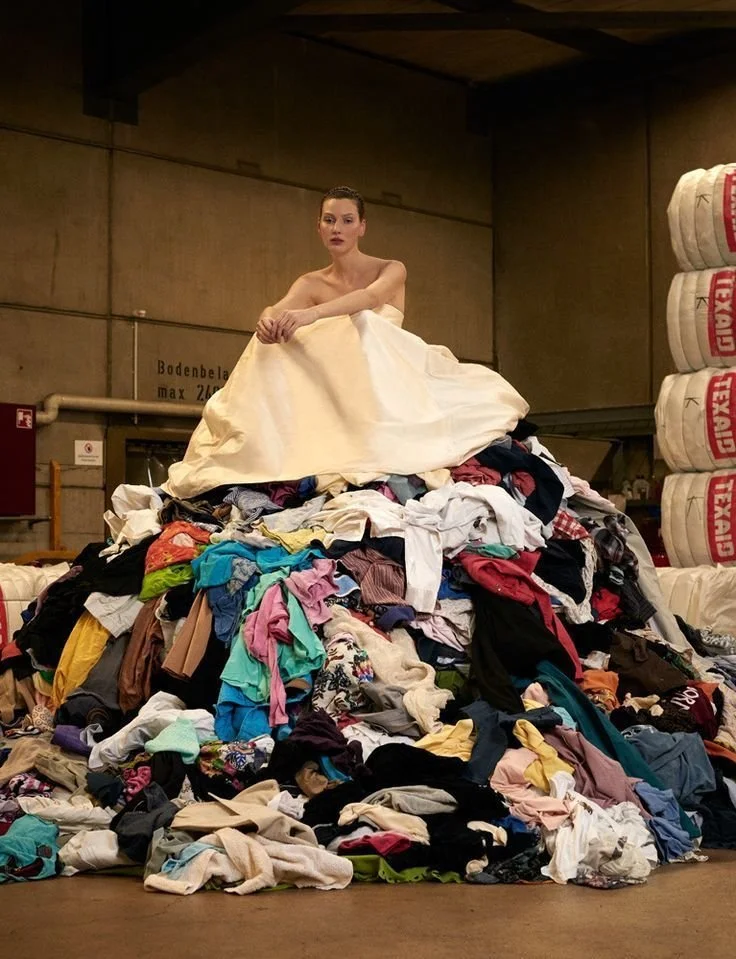
Fast fashion brands make it simple for consumers to buy items on a whim at low prices. Due to the low quality that comes with the clothing pieces, these items are often only worn seven times before being thrown away and taking 200 years to decompose. Fast fashion brands contribute to viral trends, allowing them to communicate with a younger audience through social media. This adds to the problem of hyper-consumerism. Consumers purchase items at a large, unnecessary scale and cycle through their wardrobe quickly. The fast fashion industry releases new garments speedily, therefore providing an outlet for hyper-consumerism. From this comes a plethora of environmental impacts.
The fast fashion industry is the second largest polluting industry in the world. The chemicals used in production of the garments thrown away in landfills have been found to seep into the ground. This can lead to contaminated water supplies, air, or food. The water used to dye the textiles can be added up to 5,640,000 Olympic sized swimming pools of pollution every year, as the industry uses 2,700 liters a day. The industry produces clothes that are low-quality and don’t last long; their unethical approach as to how they should create their items becomes insensitive as 2 billion people are unable to access clean drinking water. The industry has an unimaginable carbon footprint as they use more international/maritime flight hours to ship their products than any other industry in the world. Every fashion industry contributes to environmental problems, but the fast fashion industry is a strong contender because of the speed and quantity of the cheap items they make.
Recognition of fast fashion if becoming more prevalent as people are questioning the impact it’s making. Raising awareness will encourage individuals to shop sustainably through ethical brands and second-hand stores.
There are numerous actions that can be taken by consumers to deescalate the problem of the fast fashion industry. Encouraging donations, shopping second-hand or sustainably, and investing in high-quality clothing are all things an individual can do to stop supporting fast fashion brands. Anyone can donate their own items to their local shelters or thrift stores. Thrift stores, such as Goodwill, allow for low to middle income individuals to shop for clothing and other items at affordable prices. Shopping second hand is a better alternative for the working class—a trend of the upper-class shopping at thrift stores has limited the options the working class has when it comes to buying clothes.
It must be said that fast fashion will not end soon. There are precautions and actions that can be taken by clothing brands and consumers, but it’s the people in charge of the fast fashion companies that can truly make a change. If sustainable fashion companies advertised the way fast fashion companies did, the industry may eventually fade into obscurity. For example, if sustainable fashion was to become trendy, then consumers would flock to buy garments that are ethically sourced. Sustainable clothing lasts longer than clothing made in the fast fashion industry.
At Babaloo Rewoven, we operate primarily on sustainability, quality, and compassion. We have partnered with The Nature Conservancy, a charity with the intention to conserve the lands and waters all life depends on, and pledge to donate 20% of all proceeds to their cause.
Support Babaloo Rewoven. Made again, made better.
Learn More About the Harmful Effects of Fast Fashion
-
Williams, E. (2022). Appalling or advantageous? exploring the impacts of fast fashion from environmental, social, and Economic Perspectives. Journal for Global Business and Community, 13(1). https://doi.org/10.56020/001c.36873
-
Sahimaa, O., Miller, E. M., Halme, M., Niinimäki, K., Tanner, H., Mäkelä, M., Rissanen, M., Härri, A., & Hummel, M. (2023). The only way to fix fast fashion is to end it. Nature Reviews Earth & Environment, 4(3), 137–138. https://doi.org/10.1038/s43017-023-00398-w
-
Ozdamar-Ertekin, Z. (2017). The true cost: The bitter truth behind fast fashion. Markets, Globalization & Development Review, 2(3). https://doi.org/10.23860/mgdr-2017-02-03-07